
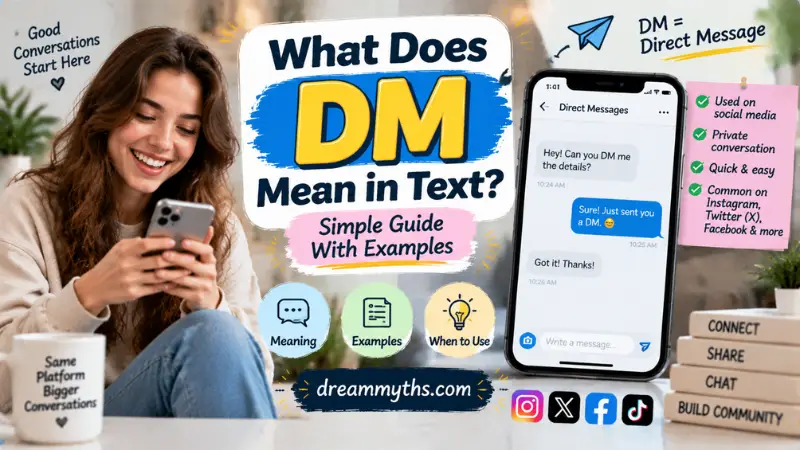
The DM meaning in text is “direct message.” People use DM as a short form when talking about a private message sent through social media platforms, messaging apps, or online communities.
When someone says “DM me,” they are asking another person to send them a private message instead of replying publicly.
For example:
“DM me the details.”
This means:
“Send me the details through a private message.”
The meaning of DM in text messages usually refers to private online communication, especially on platforms where users can send public posts and private messages separately.
Today, DM is commonly used in casual conversations, social media comments, online groups, and digital communication.
Quick Answer
DM means “direct message” in text and online conversations. It refers to a private message sent between users on social media platforms, apps, or websites. When someone says “DM me,” they mean “send me a private message.” DM is informal and commonly used in digital communication.
What Does DM Stand For?
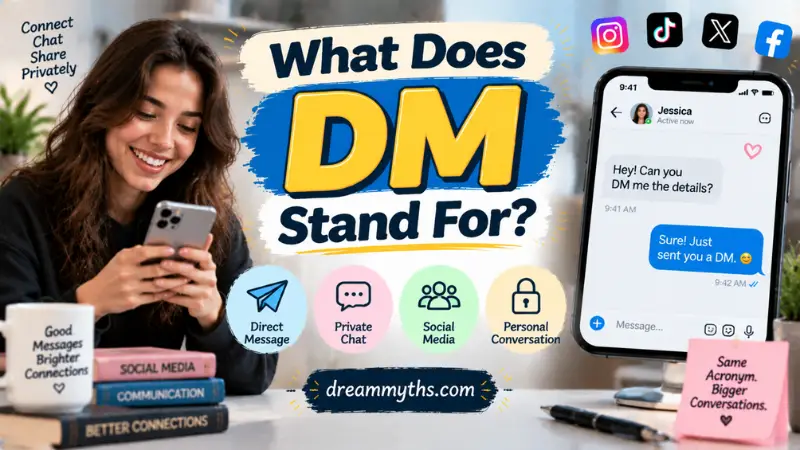
The DM meaning in text comes from the phrase “direct message.” A direct message is a private conversation between users that is separate from public comments or posts.
The abbreviation DM is widely used because it is faster to type than writing “direct message” every time.
Examples:
“I sent you a DM.”
Meaning:
“I sent you a private message.”
“Check your DMs.”
Meaning:
“Look at your private messages.”
The phrase “direct message” describes the function, while DM is the shorter internet abbreviation people use in everyday conversations.
What Is the DM Meaning in Text Messages?
The DM meaning in text messages depends on the conversation, but it most commonly means a private message. People use DM when they want to move a conversation from a public space to a private one.
For example:
Public comment:
“I need more information about this product.”
Reply:
“DM me, and I’ll send you the details.”
Here, the person is asking for a private conversation.
The DM meaning in text is especially common when people communicate through:
- Social media apps
- Online communities
- Creator platforms
- Messaging features
- Business pages
Although DM can appear in regular texting, it is more strongly connected with online platforms.
How Do People Use DM in Conversations?
The meaning of DM becomes clearer by looking at how people use it in real conversations.
Asking Someone to Send a Private Message
A common use of DM is requesting private communication.
Example:
“DM me your address.”
Meaning:
“Send your address privately.”
Referring to a Private Message
People also use DM as a noun.
Example:
“I got your DM.”
Meaning:
“I received your direct message.”
Talking About Multiple Messages
The plural form is usually written as DMs.
Example:
“I checked my DMs this morning.”
Meaning:
“I checked my private messages.”
The DM meaning in text stays the same whether someone talks about one message or several messages.
DM Meaning on Social Media
The DM meaning in text is closely connected to social media because many platforms use direct messaging features.
People use DMs to:
- Ask questions
- Share private information
- Continue conversations
- Contact creators
- Discuss topics privately
- Send personal messages
For example:
“The brand told customers to DM them for support.”
Meaning:
Customers should send private messages instead of commenting publicly.
The word DM is now commonly understood in online spaces because private messaging has become a normal part of digital communication.
What Does “DM Me” Mean?
“DM me” means “send me a direct message.”
When someone writes:
“DM me.”
they are asking you to contact them privately.
Examples:
“DM me if you want the full list.”
Meaning:
“Send me a private message if you want the full list.”
“DM me your questions.”
Meaning:
“Send your questions through a private message.”
The phrase is casual and commonly used on social media.
DM Meaning in Instagram, TikTok, and Other Apps
The DM meaning in text is similar across most social platforms. A DM usually refers to a private message feature.
Examples:
- Instagram DM = private message on Instagram
- TikTok DM = private message on TikTok
- X/Twitter DM = private message between users
- Facebook DM = private chat message
Although each platform may have different features, the basic DM meaning remains the same: a private digital message.
For example:
“Send me a DM on Instagram.”
This means:
“Send me a private message through Instagram.”
Is DM Formal or Informal?
The DM meaning in text is informal. It is mainly used in casual digital communication rather than formal writing.
DM is common in:
- Text messages
- Social media posts
- Online chats
- Informal emails
- Digital conversations
Examples:
“DM me when you arrive.”
“I replied to your DM.”
However, in formal business writing, it is often better to write “direct message” the first time or use clearer wording depending on the audience.
Example:
Informal:
“Send me a DM.”
More formal:
“Please send me a private message.”
The right choice depends on the situation and the relationship between the people communicating.
Can DM Mean Something Other Than Direct Message?
Yes, DM can have other meanings in different fields. However, in the context of texting and social media, the dominant DM meaning in text is “direct message.”
Other uses of DM may appear in areas such as:
- Gaming
- Business
- Technology
- Education
The meaning depends on context.
For everyday online conversations, especially when someone says “DM me,” it almost always refers to direct messaging.
DM Meaning in Texting vs. Messaging
The DM meaning in text is usually the same as the meaning in messaging apps: a private message sent directly to another person. However, people often use DM more when talking about social media rather than traditional texting.
For example:
Text message:
“Can you send me the address?”
Social media:
“DM me the address.”
Both messages request private information, but DM is more strongly connected with online platforms.
The meaning of DM in texting can depend on where the conversation happens. If someone is talking about Instagram, TikTok, Facebook, or another social platform, DM almost always means a private message.
DM Examples in Real Conversations
The DM meaning in text becomes easier to understand through everyday examples.
Example 1: Asking for Information
Person A:
“Where did you buy that jacket?”
Person B:
“I’ll DM you the link.”
Meaning:
Person B will send the link privately.
Example 2: Moving a Public Conversation Private
Comment:
“I need help with my order.”
Reply:
“DM us your order number.”
Meaning:
The company wants the customer to send private details through a direct message.
Example 3: Social Media Conversation
Person A:
“Your artwork looks amazing!”
Person B:
“Thanks! DM me if you want to discuss a commission.”
Meaning:
Person B wants to continue the conversation privately.
Example 4: Personal Communication
“I saw your message. I’ll DM you later.”
Meaning:
“I will send you a private message later.”
These examples show how the DM abbreviation meaning works naturally in online conversations.
DM as a Noun and a Verb
The DM meaning in text can work as both a noun and a verb.
DM as a Noun
When DM is a noun, it refers to the message itself.
Examples:
“I received a DM from my friend.”
Meaning:
“I received a private message from my friend.”
“Your DM was helpful.”
Meaning:
“Your private message was helpful.”
DM as a Verb
When DM is used as a verb, it means sending a direct message.
Examples:
“DM me the details.”
Meaning:
“Send me the details privately.”
“I’ll DM you tonight.”
Meaning:
“I’ll send you a private message tonight.”
This flexibility is one reason DM has become common in online communication.
DM vs. Text Message: What Is the Difference?
Although both involve private communication, DM and text messages are not always the same.
A text message usually refers to a message sent through a phone number using a mobile messaging service.
A DM usually refers to a message sent through a social media platform or online service.
| Term | Meaning | Common Place Used |
|---|---|---|
| DM | Direct message | Social media and online platforms |
| Text message | Message sent by phone | Mobile phone communication |
Examples:
“I texted my brother.”
This usually means sending a phone message.
“I DM’d the creator.”
This usually means sending a private social media message.
The DM meaning in text is specifically connected with digital platforms, while texting is usually connected with phone communication.
DM vs. PM: What Is the Difference?
DM and PM are closely related. Both can describe private online messages.
DM means direct message.
PM means private message.
In many online communities, these terms can be used in similar ways.
Examples:
“Send me a DM.”
“Send me a PM.”
Both usually mean:
“Send me a private message.”
The difference is mostly based on the platform and community. Many social media platforms prefer the term DM, while forums and older online communities may use PM more often.
Does Capitalization Matter in DM?
No. The meaning usually stays the same whether someone writes:
- DM
- dm
Examples:
“Check your DM.”
“Check your dm.”
Both mean the same thing.
However, uppercase DM is more common because abbreviations are often written in capital letters.
How Do People Use DMs for Business?
The DM meaning in text is not limited to personal conversations. Businesses, creators, and organizations also use DMs to communicate with customers.
Common uses include:
- Customer questions
- Product inquiries
- Support requests
- Collaboration offers
- Private feedback
Examples:
“DM us for pricing information.”
Meaning:
“Send us a private message to ask about prices.”
“Influencers often receive DMs from followers.”
Meaning:
Followers send them private messages.
Businesses often prefer DMs because they allow private conversations without sharing personal information publicly.
Are DMs Always Private?
The meaning of DM suggests a private message, but users should still be careful about sharing sensitive information online.
A DM is usually private between users, but privacy depends on:
- The platform
- Account settings
- Security practices
- The people involved
Avoid sharing highly sensitive information through messages unless you trust the platform and recipient.
Examples of information to protect:
- Passwords
- Financial details
- Private identification information
The DM meaning in text describes the communication method, not a guarantee of complete privacy.
Common Mistakes With DM
Understanding the DM meaning in text is simple, but people sometimes misunderstand how to use this abbreviation.
Mistake 1: Thinking DM Means Any Message
Not every message is a DM.
Incorrect:
“I sent my friend a DM through regular phone texting.”
Better:
“I sent my friend a text message.”
DM usually refers to private messages on online platforms.
Mistake 2: Using DM in Formal Writing Without Explanation
DM is common online but may not be understood by everyone in formal situations.
Informal:
“DM me the details.”
More formal:
“Please send me a direct message with the details.”
Mistake 3: Confusing DM With Other Meanings
DM can have different meanings outside online messaging.
For example, in some contexts, DM may refer to other terms. The correct meaning depends on the situation.
When discussing social media or online conversations, the DM meaning in text is almost always “direct message.”
When Should You Use DM?
The DM meaning in text fits best in casual digital communication.
Good situations include:
- Social media conversations
- Online communities
- Messaging friends
- Contacting creators
- Customer support chats
Examples:
“DM me when you get home.”
“I’ll send you the details in a DM.”
“Check your DMs.”
These uses sound natural in everyday online communication.
When Should You Avoid Using DM?
Although DM is widely understood, it may not be appropriate in every situation.
Avoid using only the abbreviation when communicating with:
- People unfamiliar with internet slang
- Formal organizations
- Professional audiences
- Older audiences who may not know the term
Instead of:
“Send me a DM.”
You may write:
“Please send me a private message.”
The best choice depends on your audience and the level of formality required.
DM Meaning in Online Culture
The DM meaning in text has become an important part of online communication because many conversations now happen through private messaging instead of public comments. A DM allows people to communicate directly without posting their conversation where everyone can see it.
People commonly use DMs for:
- Personal conversations
- Networking
- Asking questions
- Sharing information
- Sending private replies
- Building online connections
For example:
“I found your artwork online, so I sent you a DM.”
Meaning:
“I sent you a private message through the platform.”
The meaning of DM in social media is closely connected with convenience and privacy. Instead of creating a public reply, users can continue conversations privately.
DM Meaning for Creators and Influencers
The DM meaning in text is especially common among creators, influencers, and public figures. Many creators use direct messages to communicate with followers, brands, and potential collaborators.
Examples:
“The creator asked followers to DM for business inquiries.”
Meaning:
Followers should send a private message about business opportunities.
Creators may receive DMs about:
- Collaboration requests
- Feedback
- Questions
- Fan messages
- Product inquiries
However, users should remember that popular accounts may receive many messages, so a DM does not always guarantee a response.
Can DM Be Used in Professional Communication?
Yes, DM can be used professionally, especially in online business environments. The DM meaning in text can apply to professional conversations when people communicate through social platforms.
Examples:
“Please DM me your portfolio.”
“The company asked customers to DM their support team.”
However, the level of formality depends on the workplace and platform. In a casual business setting, DM sounds natural. In formal documents or official communication, writing “direct message” may be clearer.
For example:
Casual:
“DM me your resume.”
Professional:
“Please send your resume through a private message.”
DM Meaning in Gaming Communities
The DM meaning in text can also appear in gaming communities, where players use private messages to communicate directly.
Examples:
“DM me your username.”
Meaning:
“Send me your username privately.”
Players may use DMs to:
- Organize games
- Share information
- Contact teammates
- Discuss private matters
In gaming, the meaning of DM is usually still “direct message,” but the topic of the conversation changes depending on the community.
What Does DM Mean in a Comment?
When someone writes:
“DM me.”
under a social media post or comment, they are asking the person to start a private conversation.
Example:
Post:
“Looking for someone to design a logo.”
Comment:
“I can help. DM me.”
Meaning:
“Send me a private message so we can discuss the details.”
The DM meaning in text comments usually signals that the conversation should move away from the public section.
What Is the Plural of DM?
The plural form of DM is usually DMs.
Examples:
“I have three new DMs.”
Meaning:
“I have three new direct messages.”
“My DMs are full.”
Meaning:
“My private message inbox has many messages.”
The singular form refers to one message, while DMs refers to multiple messages or the general inbox.
Common Expressions Using DM
The DM meaning in text appears in several common phrases.
“Slide Into My DMs”
This phrase means sending someone a private message, often in a casual or sometimes flirtatious way.
Example:
“If you have questions, slide into my DMs.”
Meaning:
“Send me a private message.”
The phrase is informal and often used humorously online.
“Check Your DMs”
This means looking at your private messages.
Example:
“I sent you the details. Check your DMs.”
Meaning:
“Open your direct messages and read my message.”
“My DMs Are Open”
This means someone allows people to send them private messages.
Example:
“My DMs are open for questions.”
Meaning:
“People can privately message me.”
Related Terms to DM
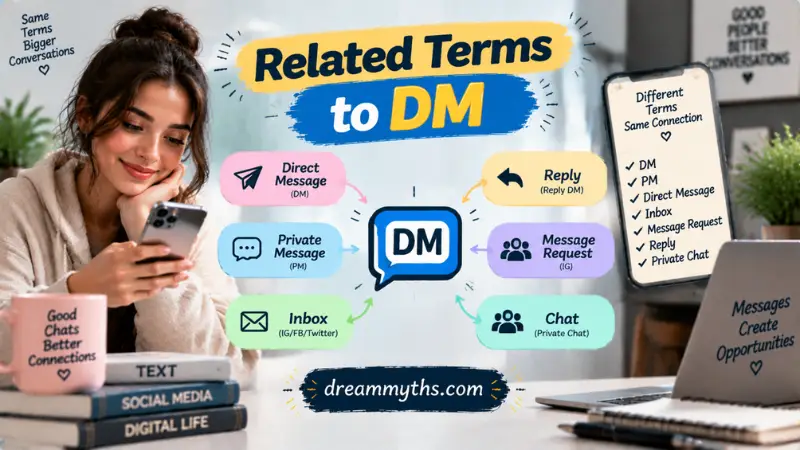
Understanding related terms helps explain the DM meaning in text more clearly.
PM
PM stands for “private message.” It has a similar meaning to DM and is often used on forums and online communities.
Example:
“Send me a PM.”
Meaning:
“Send me a private message.”
Chat
A chat usually refers to a conversation between people through a messaging system.
Example:
“Let’s chat later.”
Chat can be private or public depending on the platform.
Inbox
An inbox is the place where received messages are stored.
Example:
“Check your inbox.”
This may include DMs, emails, or other messages.
Frequently Asked Questions About DM Meaning in Text
What does DM mean in text?
The DM meaning in text is “direct message.” It refers to a private message sent through social media platforms, apps, or online services.
What does “DM me” mean?
“DM me” means “send me a direct message.” It is a request for someone to contact you privately instead of replying publicly.
Is DM the same as texting?
No. A text message is usually sent through a phone number, while a DM is usually a private message sent through a social media platform or online service.
Is DM slang?
DM is an informal internet abbreviation. It is widely used in online conversations, but the full phrase “direct message” is more suitable for formal communication.
Conclusion
The DM meaning in text is “direct message,” a private message sent through social media platforms, apps, or online communities. People use DM when they want to move a conversation from a public space into a private conversation.
The meaning of DM in texting is usually connected with online communication, where users send messages directly to friends, creators, businesses, or other users. Whether someone says “DM me,” “check your DMs,” or “I sent you a DM,” the expression usually refers to private digital communication.
Understanding what DM means in text helps you communicate more naturally online. While DM is common in casual conversations, professional settings may require clearer wording such as “direct message” or “private message.” Knowing the context allows you to use this abbreviation correctly and avoid confusion.


