
Updated: October 21, 2026
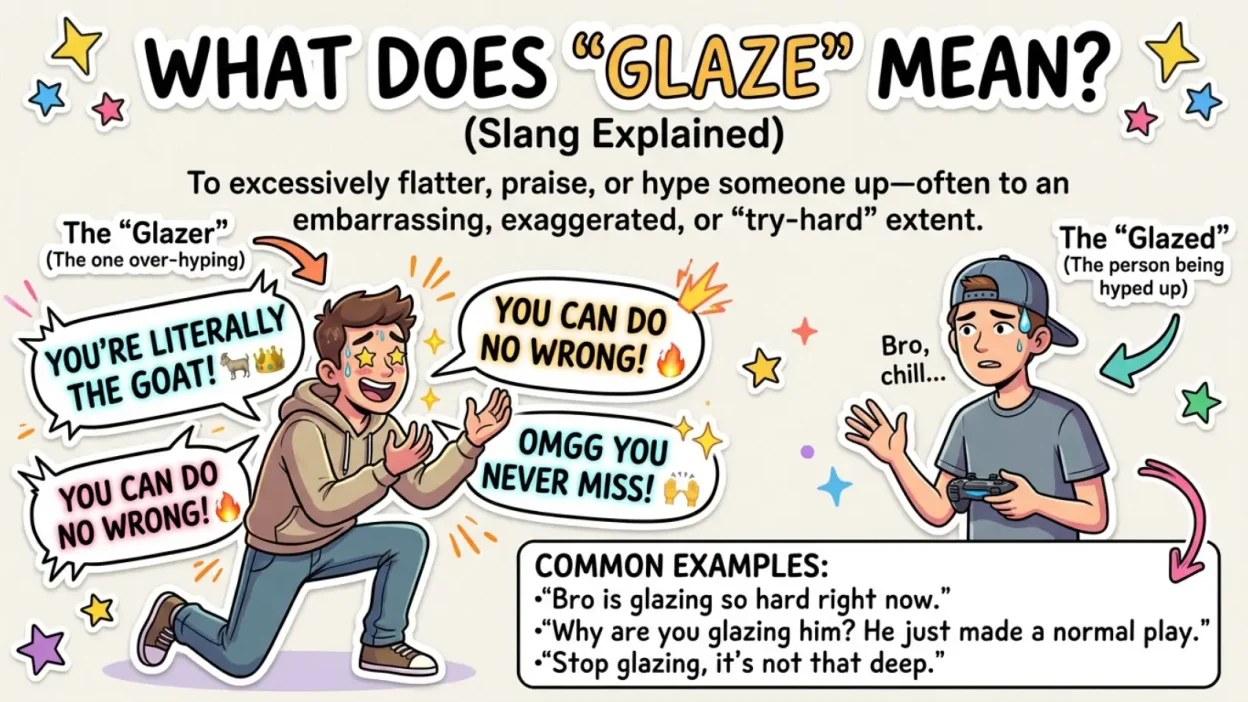
Have you seen someone comment “Stop glazing” on TikTok, hear a friend say “You’re glazing him,” or notice the word glaze in gaming chats? In modern internet slang, glaze means to praise, compliment, or defend someone excessively, especially when the admiration seems exaggerated, unnecessary, or undeserved.
Unlike the ordinary meaning of glaze, which refers to a shiny coating or a layer of something applied to a surface, slang glaze is often used to call out someone who appears to be trying too hard to impress another person.
For example, if someone keeps saying their favorite celebrity is perfect and can do nothing wrong, another person might respond, “Bro, stop glazing.”
In this guide, you will learn the glaze meaning in slang, where people use it, how to recognize it in text messages and social media comments, and how it differs from ordinary praise.
Quick Answer: What Does Glaze Mean in Slang?
Glaze means to praise, flatter, or defend someone excessively. It is usually used as a teasing or critical expression when someone seems overly impressed by another person.
- Slang meaning: Excessive praise, admiration, or flattery
- Common phrase: “Stop glazing”
- Tone: Teasing, mocking, critical, or playful
- Common platforms: TikTok, Twitch, YouTube, Discord, and gaming chats
- Related expressions: Sucking up, fanboying, hyping someone up, and excessive flattery
Example:
“Bro, you keep calling him the greatest player ever. Stop glazing!”
Meaning: “You’re praising him way too much. Stop acting like he’s perfect.”
The word is informal, and its tone depends on the people involved and the surrounding conversation.
What Does Glaze Mean in Slang?
In internet slang, to glaze someone means to give them excessive praise or admiration, often in a way that seems exaggerated, biased, or intended to win their approval.
The person doing the glazing may constantly compliment someone, defend their mistakes, exaggerate their abilities, or act as if they can do no wrong.
For example:
- “You’re glazing that streamer too much.”
- “He glazes his favorite basketball player every day.”
- “Stop glazing your friend just because he’s popular.”
- “The comments are glazing that actor like crazy.”
Each example suggests that the praise has gone beyond what the speaker considers reasonable.
Importantly, glazing is not simply complimenting someone. It usually implies that the praise is excessive or embarrassing. The word is often used jokingly among friends, but it can also be an insult.
What Does “Stop Glazing” Mean?
“Stop glazing” means “stop praising that person so much.” It is one of the most recognizable ways the slang term appears online.
People may use it when someone repeatedly praises a celebrity, defends a content creator, or treats a friend as if they are better than everyone else.
Examples of “Stop Glazing”
Example 1: Talking about a celebrity
Person A: “He is the most talented person alive. Everything he does is perfect.”
Person B: “Bro, stop glazing.”
Meaning: Person B thinks the praise is excessive.
Example 2: Gaming conversation
Player A: “That player is unbeatable. Nobody comes close to him.”
Player B: “You’re glazing. He lost three matches today.”
Meaning: Player B believes the other person is exaggerating the player’s skill.
Example 3: Friends joking around
Friend A: “My best friend is the funniest, smartest, coolest person ever.”
Friend B: “Stop glazing your boy 😂”
Meaning: Friend B is teasing their friend for giving someone too many compliments.
Depending on the tone, “stop glazing” can be playful banter or a genuine criticism.
7 Common Examples of Glaze in Slang
Here are seven everyday examples that show how people use the term in online conversations.
1. Glazing a Celebrity
Example: “You’re glazing that singer like she has never made a bad song.”
Meaning: You are praising the singer excessively and ignoring possible flaws.
This usage is common in discussions about musicians, actors, athletes, and other public figures.
2. Glazing a Friend
Example: “Bro, you glaze your best friend every time he walks into the room.”
Meaning: You constantly compliment your friend or make him sound better than everyone else.
The phrase may be humorous, especially among close friends.
3. Glazing a Gamer
Example: “The chat is glazing that streamer after one good play.”
Meaning: Viewers are giving the streamer excessive praise for a single impressive moment.
The term is frequently used in gaming and livestream discussions.
4. Glazing a Sports Player
Example: “You keep saying he’s the greatest ever. You’re glazing him.”
Meaning: The speaker thinks the other person is exaggerating the player’s achievements.
This usage often appears in debates about basketball, football, soccer, and other sports.
5. Glazing Someone in the Comments
Example: “Every comment is glazing him for doing the bare minimum.”
Meaning: People are praising someone too much for something ordinary.
The expression criticizes the amount of praise rather than necessarily denying that the person did something good.
6. Glazing a Romantic Interest
Example: “He keeps calling her perfect. His friends say he’s glazing.”
Meaning: His friends think he is excessively praising someone he likes.
In this context, the word can suggest infatuation or biased admiration, but it does not automatically mean someone is romantically interested.
7. Glazing as a Joke
Example: “I said his haircut looked good, and my friend told me to stop glazing 😂”
Meaning: The friend jokingly treated an ordinary compliment as excessive praise.
This shows why the context matters: someone can use the term even when the compliment is sincere and harmless.
What Does Glaze Mean on TikTok?
On TikTok, glaze usually refers to excessive praise or admiration. The word appears in video comments, reaction videos, memes, and discussions about celebrities, influencers, sports stars, and online personalities.
For example, a user might post a video praising a creator, only to receive comments such as:
- “The glazing is crazy.”
- “Bro is glazing so hard.”
- “Stop glazing him.”
- “Why is everyone glazing this guy?”
These comments suggest that the commenters think the praise is exaggerated or undeserved.
Why Is Glaze Popular on TikTok?
The term works well in short-form content because it communicates criticism quickly. Instead of writing a long explanation about someone being excessively flattering, users can simply say “glazing.”
It is also useful in humorous reactions. Someone might label a friend a “glazer” because the friend keeps defending a favorite celebrity, athlete, or fictional character.
However, not every comment using the term is serious. Some people use it as a joke whenever anyone expresses strong admiration.
What Does Glaze Mean in Gaming and on Twitch?
In gaming communities and livestream chats, glazing means excessively praising a player, streamer, or gaming personality.
A viewer might call someone a glazer if they insist that their favorite player is unbeatable, excuse every mistake, or argue that a streamer is better than everyone else without offering a convincing reason.
Examples include:
- “The chat is glazing the streamer again.”
- “You’re glazing that pro player.”
- “One good match and everyone starts glazing.”
- “Stop glazing your favorite team.”
The word is particularly useful in competitive discussions because fans often disagree about who deserves the most credit.
Example conversation:
Player A: “Nobody in this lobby is better than Max.”
Player B: “You’re glazing Max. He got eliminated first.”
Here, Player B accuses Player A of exaggerating Max’s skill.
What Does Glazer Mean in Slang?
A glazer is a person who excessively praises or defends someone. It is the noun form associated with the slang verb glaze.
For example:
- “He’s such a glazer.”
- “The biggest glazer in the comments just arrived.”
- “Don’t be a glazer just because you like the team.”
Calling someone a glazer usually suggests that their admiration is excessive or biased. It can be an insult, but friends may also use it jokingly.
Glaze vs. Glazer
| Word | Meaning | Example |
|---|---|---|
| Glaze | To excessively praise someone | “Stop glazing him.” |
| Glazing | The act of giving excessive praise | “The glazing is unreal.” |
| Glazer | A person who excessively praises someone | “He’s a glazer.” |
These forms are used informally and are especially common in online discussions.
Is Glazing an Insult?
Glazing can be an insult, but it is not always meant seriously. The word usually carries a negative implication because it suggests that someone’s praise is excessive, biased, or embarrassing.
Whether it is offensive depends on the context.
- Among friends: It may be harmless teasing.
- In a sports debate: It may criticize someone for being biased toward a favorite player.
- On social media: It may be used to mock a creator’s fans.
- During an argument: It can be a direct insult intended to dismiss someone’s opinion.
For example, telling a friend “You’re glazing him” with a laughing emoji may be playful. Saying the same thing during a heated argument may be dismissive.
The word does not necessarily mean the person being praised is bad. It means the speaker thinks the amount of praise is excessive.
Where Did the Slang Word Glaze Come From?
The slang use of glaze developed through internet and online community culture. It became especially visible in social media, livestreaming, gaming conversations, and meme-based discussions.
The precise origin of the slang usage is difficult to attribute to one person or one moment. Online slang often spreads through repeated use across different communities before becoming widely recognizable.
Today, the word is commonly used to describe excessive praise, especially when someone seems to be defending a favorite person regardless of their mistakes.
The ordinary word glaze has a different meaning: a shiny coating applied to food, pottery, or another surface. The slang usage is figurative and should be understood from the context rather than the literal definition.
Glaze vs. Sucking Up vs. Hyping Someone Up
These expressions are related, but they do not mean exactly the same thing.
| Expression | Meaning | Main difference |
|---|---|---|
| Glazing | Excessively praising someone | Usually implies too much or biased admiration |
| Sucking up | Flattering someone to gain favor | Often suggests a motive, such as seeking approval |
| Hyping someone up | Encouraging or enthusiastically praising someone | Can be positive and supportive |
| Fanboying / fangirling | Showing intense enthusiasm for a favorite person or thing | Can be sincere excitement rather than excessive flattery |
| Complimenting | Saying something positive about someone | Usually neutral and not inherently excessive |
Glazing vs. Sucking Up
Glazing often describes excessive admiration, whether or not the person expects anything in return. Sucking up more strongly suggests that someone is flattering another person to gain approval, special treatment, or an advantage.
Example:
- “You’re glazing that player” means you praise the player excessively.
- “You’re sucking up to the boss” suggests you are flattering the boss to gain favor.
Glazing vs. Hyping Someone Up
Hyping someone up is often positive. It can mean encouraging a friend before a competition or celebrating an achievement.
Glazing is more likely to imply that the praise has gone too far.
Example:
- “My friends hyped me up before the game” describes encouragement.
- “My friends said I was glazing him” suggests they thought the praise was excessive.
How to Use Glaze in a Sentence
You can use glaze, glazing, or glazer in informal conversations, especially when talking about social media, sports, gaming, or celebrities.
Here are some natural sentence patterns:
- Stop glazing + person: “Stop glazing that streamer.”
- You’re glazing + person: “You’re glazing your favorite player.”
- The glazing is + description: “The glazing is unreal.”
- Such a glazer: “He’s such a glazer.”
- Everyone is glazing + person: “Everyone is glazing that actor.”
Because the term is informal and potentially insulting, it is best used with people who understand internet slang. In professional writing or serious conversations, phrases such as “excessive praise” or “unfairly biased admiration” are clearer.
Frequently Asked Questions About Glaze Meaning in Slang
1. What does glaze mean in slang?
In internet slang, glaze means to praise, flatter, or defend someone excessively. It often implies that the admiration is exaggerated, biased, or undeserved.
2. What does “stop glazing” mean?
“Stop glazing” means “stop praising that person so much.” It is often used to tease someone who seems overly impressed by a celebrity, athlete, streamer, or friend.
3. What does glazer mean?
A glazer is someone who excessively praises or defends another person. The term is usually teasing or critical, although it can be used humorously among friends.
4. What does glazing mean on TikTok?
On TikTok, glazing usually refers to excessive praise in comments, videos, or discussions. People may use it when they think someone is treating a creator or celebrity as if they can do no wrong.
5. Is glaze a bad word?
Glaze is not profanity by itself. However, calling someone a glazer can be insulting because it suggests their admiration is excessive or embarrassing.
6. Does glazing mean flirting?
Not necessarily. Glazing means excessive praise. It can happen when someone has a romantic interest, but it also occurs among friends, fans, gamers, and sports supporters.
7. What does “the glazing is crazy” mean?
It means the speaker thinks the amount of praise someone is receiving or giving is excessive. The phrase is often used humorously in social media comments.
8. What is the difference between glaze and compliment?
A compliment is a positive remark and can be completely sincere and appropriate. Glazing suggests excessive praise or admiration that the speaker considers exaggerated.
9. What does glaze mean in gaming?
In gaming, glaze usually means excessively praising a player, streamer, team, or gaming personality. It often appears during arguments about skill, rankings, or performance.
10. Can I use glaze in everyday conversation?
Yes, in casual conversations with people who understand internet slang. For formal situations, use clearer expressions such as “overpraising someone” or “giving someone excessive praise.”
Conclusion: What Does Glaze Really Mean?
Glaze means to praise, flatter, or defend someone excessively in internet slang. The term is popular in TikTok comments, gaming chats, livestreams, sports debates, and everyday online conversations.
Phrases such as “stop glazing,” “the glazing is crazy,” and “he’s a glazer” suggest that someone is giving another person too much admiration. The expression is often playful, but it can also be critical or insulting.
Remember the key difference: complimenting someone is normal, while glazing implies that the praise has gone overboard. Understanding the context will help you recognize whether the word is being used as a joke, a criticism, or a serious accusation.


