

Dream catchers meaning is connected with protection, dreams, symbolism, and Indigenous cultural traditions. The familiar hoop-and-web design is strongly associated with Ojibwe and Anishinaabe traditions, while different Native communities have their own interpretations.
Understanding dream catchers meaning requires looking at the object’s history, traditional parts, spiritual ideas, and modern uses instead of treating every explanation as a universal belief.
A dream catcher is more than a decorative object. Its hoop, woven web, feathers, and other elements have been connected with ideas about dreams, protection, and cultural identity. The exact symbolism can differ depending on the Indigenous tradition being discussed.
Key Takeaways
- Dream catchers meaning is commonly linked with protection, dreams, and Indigenous traditions.
- Dream catchers are strongly associated with Ojibwe and Anishinaabe cultural history.
- The traditional design includes a hoop, woven web, feathers, and natural materials.
- Different elements may represent ideas such as life cycles, dreams, air, and connection.
- Indigenous nations may have different interpretations rather than one shared meaning.
Dream catchers meaning centers on the relationship between dreams, protection, and cultural symbolism. In commonly described Ojibwe interpretations, a dream catcher is connected with sleep and dreams. The woven web, circular hoop, feathers, and other parts may carry symbolic associations.
Modern interpretations have expanded beyond traditional contexts. Some people view dream catchers as cultural art, personal symbols, spiritual reminders, or decorative pieces. However, modern meanings should not replace the specific Indigenous traditions connected with the object.
The most accurate way to understand dream catchers meaning is to consider both its cultural origins and the different ways people interpret the symbol today.
What Is a Dream Catcher?
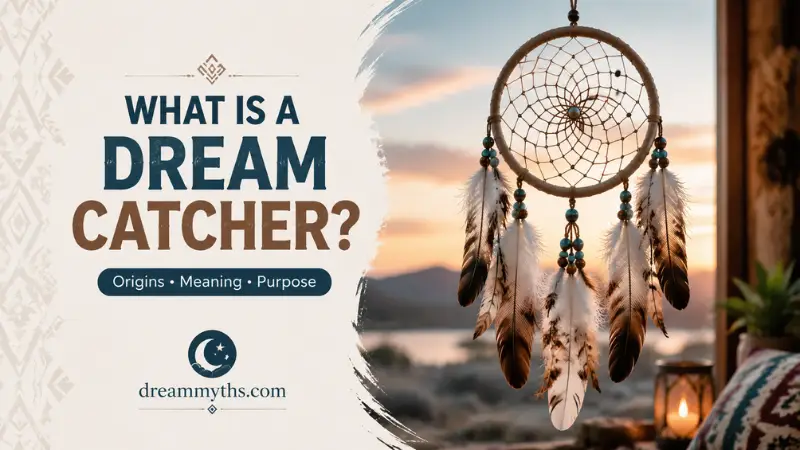
A dream catcher is a handmade object traditionally created with a circular hoop and a woven web or net placed inside. Traditional designs may include feathers, beads, sinew, hide, and natural materials such as willow. The structure and materials help explain much of the symbolism behind dream catchers meaning.
Dream catchers are strongly associated with Ojibwe and Anishinaabe traditions. The familiar design later became recognized across many communities and cultures. Traditionally, the object was connected with sleep, dreams, and protection, especially for children.
The Ojibwe cultural context gives deeper importance to dreams. The Ojibwe People’s Dictionary defines bawaajigan as “a dream, a vision,” showing that dreams can hold personal and spiritual significance beyond ordinary nighttime experiences.
Modern dream catchers can look very different from traditional examples. Decorative versions may include bright colors, gemstones, metal designs, synthetic fibers, and different artistic styles. These newer designs may carry personal meanings, but they should not automatically be considered traditional Indigenous symbolism.
Dream Catchers Meaning: Core Symbolism
Dream catchers meaning is most commonly connected with protection, dreams, and cultural tradition. In commonly described Ojibwe interpretations, the woven web represents a protective element connected with filtering harmful dreams or influences.
The complete design creates a collection of symbols. The circular hoop may represent the circle of life, while the web reflects the image of a spider’s web. Feathers are often associated with air and positive dreams, while beads and other additions may carry different meanings depending on the tradition.
The phrase dream catchers meaning can include several connected ideas:
- Protection from harmful dreams or negative influences.
- Peaceful sleep and comfort during rest.
- Dream awareness and symbolic interpretation.
- Connection with Indigenous cultural traditions.
- Personal meaning created through modern use.
These meanings should be understood carefully. Not every dream catcher has identical symbolism, and different Indigenous communities may explain the object in different ways.
Dream Catchers Meaning Symbolism
Dream catchers meaning symbolism comes from the object’s individual parts and the cultural traditions connected with them. The hoop, web, feathers, beads, gemstones, and arrowheads are commonly discussed symbols, although their meanings can vary.
Hoop Symbolism
The dream catcher hoop is commonly associated with the circle of life. The circular shape may represent cycles, connection, continuity, and the repeating patterns found in nature.
The hoop creates the foundation of the dream catcher. Traditional examples often used willow, while modern versions may include wood, metal, plastic, or other materials.
The circle does not have one fixed meaning shared by every Indigenous community. Its interpretation depends on the cultural tradition and context being discussed.
Web Symbolism
The dream catcher web forms the central woven section of the object. Its design is based on a spider web and is one of the strongest symbols connected with dream catchers meaning.
In commonly described Ojibwe interpretations, the web is associated with catching harmful dreams or influences while allowing positive dreams to reach the sleeper.
The spider web also represents patience, careful creation, and protection. Stories connected with dream catchers often include spider figures, weaving, and protective actions.
Different Indigenous traditions may describe the web differently. A Lakota story involving Iktomi presents another interpretation where the web catches bright forces while darker forces pass through. This difference shows why dream catcher symbolism should be connected to specific traditions rather than treated as one universal belief.
Feather Symbolism
Dream catcher feathers are commonly connected with air, breath, and the movement of positive dreams toward the sleeper. In many explanations of dream catchers meaning, feathers represent a pathway that allows beneficial dreams to reach the person resting below.
Feathers also have broader meanings across different Indigenous cultures. Their symbolism is not identical among every nation or community. A feather attached to a modern decorative dream catcher may be part of the design without carrying the same meaning as a feather used in a specific cultural tradition.
The type of feather, its source, and the cultural context can affect interpretation. This is why feather symbolism should be understood through the specific tradition connected with the dream catcher.
Bead Symbolism
Dream catcher beads may have different interpretations depending on the design and cultural explanation. Some commonly presented symbolism connects a single bead with the spider that creates the web, while multiple beads may represent dreams captured within the woven design.
Modern dream catchers often include beads for decoration, color, or personal expression. Their material, number, and placement can vary greatly.
Because bead meanings differ, there is no single explanation that applies to every dream catcher. Understanding the cultural background provides a more accurate view of dream catchers meaning.
Arrowheads and Gemstones Symbolism
Dream catcher arrowheads and gemstones are often found in newer designs rather than being universal elements of traditional forms.
Arrowheads are commonly associated with strength, direction, and protection in modern interpretations. Gemstones may represent personal spirituality, energy, healing, or emotional balance depending on individual beliefs.
These additions can create personal symbolism, but they should be separated from traditional Indigenous teachings. Modern designs often combine different symbolic systems with the original dream catcher structure.
Dream Catchers Meaning Spiritual
Dream catchers meaning spiritual is commonly associated with protection, dreams, awareness, and peaceful sleep. Traditional interpretations connect the object with ideas about filtering harmful dreams or influences and allowing positive experiences to reach the sleeper.
The spiritual meaning of a dream catcher can include:
- Protection during sleep.
- Awareness of dreams and personal messages.
- Connection with nature and cultural traditions.
- Reflection, peace, and personal growth.
Some modern spiritual interpretations connect dream catchers with energy, emotional protection, healing, and balance. These meanings may be meaningful to individuals, but they should not be presented as universal Ojibwe teachings.
A person may keep a dream catcher as cultural artwork, a personal reminder, a decorative object, or a spiritual symbol. The purpose and interpretation depend on the individual and their understanding of the object.
Dream Catcher Meaning Native American
Dream catcher meaning Native American should be understood through specific Indigenous traditions rather than one single explanation. The strongest historical connection is with Ojibwe and Anishinaabe communities.
Traditional accounts connect dream catchers with protection, children, dreams, and spiritual care. Stories involving Spider Woman, or Asibikaashi, are often connected with protective weaving traditions.
The term Native American includes many different nations with separate histories, languages, and teachings. A meaning associated with one community should not automatically be applied to every Indigenous group.
The wider spread of dream catchers also influenced modern understanding. During the Pan-Indian movement of the 1960s and 1970s, the design became more widely recognized among Native American communities before becoming popular in mainstream culture.
Important Traditional Variation
Indigenous dream catcher traditions include different interpretations. Ojibwe explanations commonly describe the web as a protective element connected with harmful dreams or influences.
A Lakota story involving Iktomi presents another perspective. In that story, the web is connected with capturing bright forces while allowing darker forces to pass through.
| Tradition | Main association | Dream interpretation |
|---|---|---|
| Ojibwe | Protection | Harmful dreams are filtered |
| Lakota story | Guidance | Bright forces are captured |
| Modern spiritual use | Personal meaning | Interpretation varies |
| Modern decoration | Cultural design | Symbolism may simplify |
These differences show why dream catchers meaning should be explained with cultural accuracy. Indigenous nations have their own traditions, stories, and interpretations.
Dream Catcher Origin
Dream catcher origin is strongly connected with Ojibwe and Anishinaabe traditions. Traditional dream catchers were made with a hoop and woven web, often using natural materials such as willow and sinew.
The origin story is commonly connected with Asibikaashi, the Spider Woman. Stories describe her as a protective figure connected with caring for children and maintaining protective traditions.
As Ojibwe communities spread across wider areas, stories describe women and family members continuing the practice of creating protective objects for children.
Over time, dream catchers became recognized beyond their original communities. Their movement into wider Native American culture and later commercial markets changed how many people understood the symbol.
Modern dream catchers can include many different materials and designs. These changes show how the object has developed while remaining connected to its cultural history.
Dream Catcher Story
Dream catcher story traditions explain the object through themes of protection, dreams, spiders, weaving, and guidance. These stories come from different Indigenous traditions and should be understood separately rather than combined into one universal legend.
Asibikaashi / Spider Woman Story
Asibikaashi, or Spider Woman, is an important figure connected with Ojibwe dream catcher traditions. One commonly described story connects her with protecting children and maintaining a relationship between families, dreams, and protective weaving.
As Ojibwe communities spread across different regions, stories describe women and family members creating woven objects connected with protection. The web became associated with care, safety, and the connection between the natural world and human life.
This story is one reason dream catchers meaning is often connected with children, sleeping areas, and protective traditions.
Grandmother and Spider Story
The grandmother and spider story describes a grandmother who notices a spider creating a web near her sleeping area. When someone tries to harm the spider, the grandmother protects it.
The spider responds by creating a web as a gift. The story connects the woven design with protection, patience, kindness, and the relationship between humans and nature.
This story highlights how weaving and the spider became connected with the symbolic ideas behind dream catchers. It also shows why the web remains one of the most recognized parts of the object.
Lakota / Iktomi Story
The Lakota Iktomi story provides another cultural explanation connected with dream catcher symbolism. The story describes Iktomi creating a willow hoop and weaving a web after sharing spiritual teachings.
Unlike some Ojibwe interpretations, this story describes the web as catching positive forces while allowing harmful forces to pass through.
The difference between these stories is important. Dream catchers meaning changes depending on the Indigenous tradition being discussed, and no single story represents every Native community.
Dream Catcher Rules
Dream catcher rules depend on whether someone is discussing traditional cultural practices, modern spirituality, or decorative use. There is no single universal rule system followed by every community.
Traditional descriptions often connect dream catchers with sleeping spaces, especially children’s cradles and beds. Modern users may hang them in bedrooms, near windows, offices, or other personal areas.
Some modern beliefs suggest that sunlight clears or refreshes a dream catcher. These ideas may be meaningful to individuals, but they should not be presented as universal Indigenous requirements.
A respectful approach includes:
- Learning the cultural history before assigning meanings.
- Understanding differences between Indigenous nations.
- Avoiding claims that all dream catchers have identical powers.
- Recognizing the difference between traditional use and modern decoration.
- Supporting Indigenous artists and makers when seeking culturally connected artwork.
Are Dream Catchers Good or Bad?
Dream catchers are generally viewed as protective symbols in traditional interpretations. They are commonly associated with peaceful sleep, dreams, care, and protection from harmful influences.
Whether a dream catcher is considered good or bad depends on personal beliefs, cultural views, and how the object is understood.
A dream catcher is not automatically positive or negative because of its appearance. Some people see it as cultural artwork, while others view it as a symbolic or spiritual object.
Some Christians may avoid using dream catchers as protective objects because they prefer spiritual protection through their faith. Others may use them only as decoration or appreciate their cultural history.
The meaning depends on the intention behind the object and the beliefs of the person using it.
Dream Catcher Meaning Bible
Dream catcher meaning Bible requires separating biblical teachings from Indigenous traditions. The Bible does not specifically mention dream catchers or provide a definition of their symbolism.
Biblical discussions about dreams focus on messages, warnings, visions, and spiritual understanding. Because of this, some Christian interpretations may question using a dream catcher as a spiritual protection object.
Other Christians may view a dream catcher as artwork, cultural craft, or decoration rather than a supernatural object.
The main difference comes from how someone understands the object. A person may appreciate its design and cultural background without believing it has spiritual power.
Dreams appear throughout biblical stories, but this does not connect dream catchers directly with biblical teachings.
Dream Catcher Color Meaning
Dream catcher color meaning usually comes from modern symbolic interpretations rather than one universal traditional system. Colors are often connected with emotions, nature, personal beliefs, and decorative choices.
| Color | Common modern association |
|---|---|
| White | Peace, purity, clarity |
| Blue | Calm, balance, tranquility |
| Brown | Nature, grounding, stability |
| Black | Strength, protection, mystery |
| Red | Energy, passion, vitality |
| Yellow | Joy, warmth, hope |
| Green | Growth, renewal, nature |
| Purple | Spirituality, reflection, dignity |
Color symbolism can help someone choose a dream catcher that matches personal preferences. However, a specific color does not have one fixed Indigenous meaning shared across all traditions.
Personal experiences also influence color choices. Someone may select a color because it matches their home, represents a feeling, or carries personal significance.
Which Color Dream Catcher Is Best?
The best dream catcher color depends on personal preference and intended meaning. Modern interpretations often connect white with peace, blue with calmness, green with nature, and brown with grounding.
A person looking for a relaxing bedroom design may prefer soft colors. Someone interested in nature symbolism may choose earth tones. Others may select colors based on personal memories or artistic style.
There is no single color that is best for everyone. The most meaningful choice depends on individual preference, cultural understanding, and the purpose of the dream catcher.
What Does It Mean If Someone Gifts You a Dream Catcher?
A gifted dream catcher is commonly interpreted as a symbol of care, protection, comfort, and positive wishes. Many people associate the gift with peaceful sleep, good dreams, and emotional support.
The meaning of the gift also depends on the relationship between the giver and receiver. It may represent friendship, appreciation, cultural interest, or a personal reminder.
Understanding the cultural background of the object adds more meaning to the gift. A dream catcher carries history beyond being a decorative item, so learning about its origins helps create a more respectful connection.
Traditional Materials and Construction
Traditional dream catcher materials help explain important parts of dream catchers meaning and its cultural background. Traditional designs commonly include a circular hoop, woven web, feathers, beads, sinew, and natural materials such as willow.
The hoop creates the foundation of the object, while the woven web forms the central design. Feathers and beads may add symbolic or decorative elements depending on the tradition and purpose.
Traditional dream catchers were often smaller in size, especially those connected with children’s sleeping spaces. Modern versions may be much larger and can include materials such as:
- Wood and metal hoops.
- Synthetic fibers.
- Leather and decorative fabrics.
- Glass beads and gemstones.
- Commercial craft materials.
The difference between traditional and modern construction shows how dream catchers have changed as they became popular in wider markets. Modern designs may have personal or decorative meanings while still being connected to the original cultural symbol.
Where to Hang a Dream Catcher
Where to hang a dream catcher depends on the purpose, cultural understanding, and personal preference. Traditional descriptions often connect dream catchers with sleeping areas, especially children’s cradles and beds.
Modern users may place dream catchers:
- Above a bed.
- Near a bedroom window.
- On a wall as decoration.
- In a personal meditation or creative space.
Some modern beliefs suggest hanging a dream catcher where sunlight can reach it or near a window. These ideas are not universal Indigenous rules and should be understood as modern interpretations.
The traditional connection between dream catchers and sleep remains an important part of dream catchers meaning. People interested in cultural context often choose locations connected with rest and dreams.
Dream Catcher Tattoo Meaning
Dream catcher tattoo meaning is commonly associated with protection, dreams, hope, healing, and personal growth. Many people choose this design because they connect it with overcoming challenges or creating a reminder of peace.
A dream catcher tattoo can represent different personal ideas, including:
- Protection from negativity.
- Connection with dreams and memories.
- Strength and emotional healing.
- Appreciation for Indigenous-inspired artwork.
- Personal transformation.
Cultural awareness is important because dream catchers have specific Indigenous roots. A tattoo may carry personal meaning, but understanding the history of the symbol helps avoid reducing it to only a decorative design.
The meaning of a dream catcher tattoo depends on the person wearing it, their intention, and their understanding of the cultural background.
Dream Catchers and Dreams
Dream catchers and dreams are connected through the importance of dreams in Ojibwe cultural contexts. The Ojibwe word bawaajigan refers to “a dream, a vision,” showing that dreams can carry deeper meaning.
Traditional discussions connect dreams with:
- Insight and guidance.
- Personal reflection.
- Spiritual awareness.
- Symbolic messages.
This connection helps explain why dream catchers became associated with sleeping spaces. The object represents attention toward dreams and the hope for peaceful experiences during sleep.
Modern views may connect dream catchers with positive thinking, emotional comfort, and protection from nightmares. However, a dream catcher is not a scientifically proven method for changing dreams or interpreting them.
Its value comes from cultural meaning, symbolism, personal belief, and the connection someone feels with the object.
Dream Catchers and Cultural Appropriation
Dream catchers and cultural appropriation are often discussed because the design has specific Indigenous origins but became widely commercialized.
The concerns usually involve separating the object from its cultural history and presenting simplified meanings as universal facts.
A respectful understanding of dream catchers meaning includes:
- Learning about Ojibwe and Anishinaabe origins.
- Recognizing differences between Indigenous nations.
- Avoiding claims that one meaning applies everywhere.
- Understanding the difference between cultural appreciation and commercialization.
Many modern products use the dream catcher design without explaining its history. This can remove the connection between the object and the communities where its traditions developed.
People interested in owning a culturally connected dream catcher may choose to learn about Indigenous artists and makers. Understanding the history allows people to appreciate the symbol with greater awareness.
Dream Catchers in Modern Culture
Dream catchers in modern culture appear in home décor, jewelry, tattoos, crafts, gifts, and spiritual products. The recognizable hoop-and-web design has become familiar around the world.
Modern versions may include:
- Bright colors.
- Different materials.
- Larger decorative shapes.
- Additional symbols.
- Personal artistic styles.
Some people use dream catchers as cultural artwork, while others view them as personal symbols connected with dreams, comfort, or spirituality.
The popularity of dream catchers has created new interpretations, but the cultural history remains important. Understanding the original traditions provides better context for modern uses.
Dream Catcher Meaning in Other Languages
Dream catcher meaning in other languages usually refers to translated explanations of the same concept. The core ideas remain connected with dreams, protection, symbolism, and cultural history.
Language variations allow more people to learn about the object, but translation does not create separate Indigenous meanings. The cultural background of the dream catcher remains connected with the traditions where it originated.
Dream Catcher Meaning in Hindi
Dream catcher meaning in Hindi is a language variation used by readers searching for information about the symbol. The explanation includes concepts such as dreams, protection, symbolism, and cultural traditions.
The Hindi term helps explain the topic to Hindi-speaking audiences, but it does not represent a separate traditional interpretation.
Dream Catcher Meaning in Tamil
Dream catcher meaning in Tamil refers to explaining the concept for Tamil-speaking readers. The main ideas remain connected with dreams, protection, history, and symbolism.
A Tamil explanation makes the information accessible without changing the cultural origin of the dream catcher.
Dream Catcher Meaning in Urdu
Dream catcher meaning in Urdu describes the concept for Urdu-speaking audiences. The related ideas include dreams, protection, cultural traditions, and symbolic meanings.
The language changes, but the historical background of the object remains connected with Indigenous traditions.
Dream Catcher Meaning in Malayalam
Dream catcher meaning in Malayalam is another localized search phrase. It explains the dream catcher through ideas of dreams, symbolism, protection, and cultural history.
The Malayalam version provides language accessibility without creating a separate cultural meaning.
Dream Catcher Meaning in Telugu
Dream catcher meaning in Telugu represents another language-based search variation. The core concepts remain dream symbolism, protection, Indigenous history, and modern interpretation.
A Telugu explanation helps readers understand the topic while maintaining the original cultural context.
What Does a Dream Catcher Symbolize?
A dream catcher symbolizes protection, dreams, cultural tradition, and personal meaning. The symbol is commonly associated with Indigenous traditions, especially Ojibwe and Anishinaabe interpretations connected with sleep and dreams.
The main symbolic elements include:
- Hoop: Often associated with the circle of life, cycles, and connection.
- Web: Commonly connected with filtering harmful dreams or influences.
- Feathers: Often linked with air, breath, and positive dreams.
- Beads: May represent different ideas depending on tradition or design.
- Gemstones: Often connected with modern personal symbolism.
Dream catchers meaning is not limited to one explanation. Different Indigenous communities have their own stories and teachings, while modern users may attach personal meanings based on beliefs, experiences, and artistic preferences.
The most accurate interpretation comes from understanding the cultural background instead of assigning one fixed meaning to every dream catcher.
Do Dream Catchers Really Work?
Dream catchers have cultural and symbolic meanings, but there is no scientific evidence that they physically filter nightmares or control dreams. Their importance comes from tradition, personal belief, emotional comfort, and cultural connection.
Many people value dream catchers because they represent peaceful sleep, protection, and awareness of dreams. The object can serve as a meaningful reminder before rest.
The difference between symbolism and science is important. A dream catcher may hold personal or cultural value without being a scientifically proven tool for changing dreams.
Understanding dream catchers meaning involves recognizing both traditional beliefs and modern interpretations.
What Does the Web Mean on a Dream Catcher?
The dream catcher web is commonly associated with protection, dreams, and filtering influences. The woven design is one of the most recognizable parts of the object and plays a central role in many explanations of dream catchers meaning.
The web is connected with the image of a spider’s web and the idea of careful creation. In commonly described Ojibwe interpretations, the web catches harmful dreams or influences while allowing positive dreams to reach the sleeper.
However, meanings can differ between traditions. The Lakota Iktomi story presents another interpretation where the web has a different role in guiding and filtering forces.
The web remains a powerful symbol, but its meaning should always be connected with the specific cultural tradition being discussed.
What Do the Feathers Mean on a Dream Catcher?
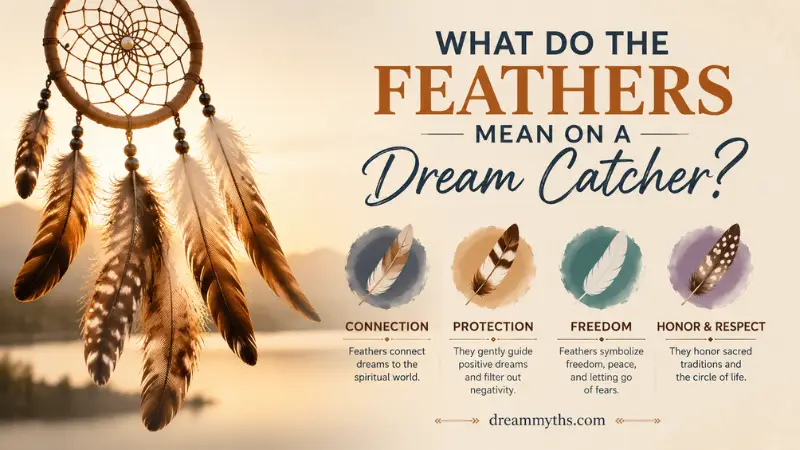
Dream catcher feathers are commonly associated with air, movement, and positive dreams. Some traditional explanations describe feathers as a pathway that helps beneficial dreams move toward the sleeper.
Feathers also carry meanings in many Indigenous cultures beyond dream catchers. Their symbolism can differ depending on the nation, tradition, and context.
Modern decorative dream catchers may include feathers because they are visually connected with the familiar design. However, decorative use does not always represent traditional symbolism.
Understanding feather meanings requires looking at the cultural background and avoiding assumptions that every feather has the same meaning.
FAQs
Where Should You Hang a Dream Catcher?
A dream catcher is commonly placed near sleeping areas, such as above or beside a bed. Traditional descriptions connect the object with protecting sleepers and dreams.
Modern users may also hang dream catchers near windows, walls, or personal spaces for decoration or symbolic reasons.
What Does a Dream Catcher Mean in the Bible?
The Bible does not specifically mention dream catchers or define their meaning. Biblical discussions focus on dreams, visions, spiritual understanding, and reliance on God.
Some Christians may avoid dream catchers as spiritual objects, while others may view them as cultural artwork or decoration.
The meaning depends on how a person understands and uses the object.
What Is the Native American Meaning of a Dream Catcher?
The Native American meaning of a dream catcher is connected with Indigenous traditions, especially Ojibwe and Anishinaabe history. Traditional explanations associate the object with protection, dreams, children, and spiritual care.
Different Indigenous nations have their own histories and interpretations. The phrase “Native American meaning” should not be treated as one single belief shared by all communities.
What Is the Spiritual Meaning of a Dream Catcher?
The spiritual meaning of a dream catcher is commonly connected with protection, dreams, awareness, and peace. Traditional interpretations connect the web with filtering dreams, while modern views may add ideas about balance and personal growth.
Modern spiritual meanings can vary and should not replace specific Indigenous teachings.
What Does It Mean If Someone Gifts You a Dream Catcher?
A gifted dream catcher is commonly seen as a symbol of care, protection, comfort, and positive wishes. The meaning may come from the giver’s intention and the relationship between both people.
Some gifts represent friendship, support, cultural appreciation, or a wish for peaceful dreams.
The cultural history of the object also adds meaning beyond its appearance.
Which Color Dream Catcher Is Best?
The best dream catcher color depends on personal preference and the symbolism someone wants to express. Modern interpretations often connect colors with ideas such as peace, calmness, strength, nature, or spirituality.
There is no single color considered best for everyone. The right choice depends on personal taste, design preference, and intended meaning.
Are Dream Catchers Good or Bad?
Dream catchers are generally viewed as protective symbols in traditional interpretations. They are commonly associated with dreams, peaceful sleep, and cultural traditions.
Whether someone considers a dream catcher good or bad depends on personal beliefs, religious views, and how the object is understood.
Conclusion
Dream catchers meaning connects history, symbolism, dreams, protection, and Indigenous cultural traditions. The hoop-and-web design has a strong association with Ojibwe and Anishinaabe communities, while other Indigenous stories provide different interpretations.
The hoop, web, feathers, beads, gemstones, and other elements each add symbolic layers. Modern uses such as tattoos, gifts, decorations, and spiritual interpretations have created additional meanings.
A respectful understanding of dream catchers meaning requires recognizing its cultural roots and avoiding the idea that every community shares one identical interpretation.
Dream catchers continue to represent a connection between art, storytelling, dreams, and cultural history. Learning the background of the symbol allows people to appreciate its meaning with greater awareness and respect.